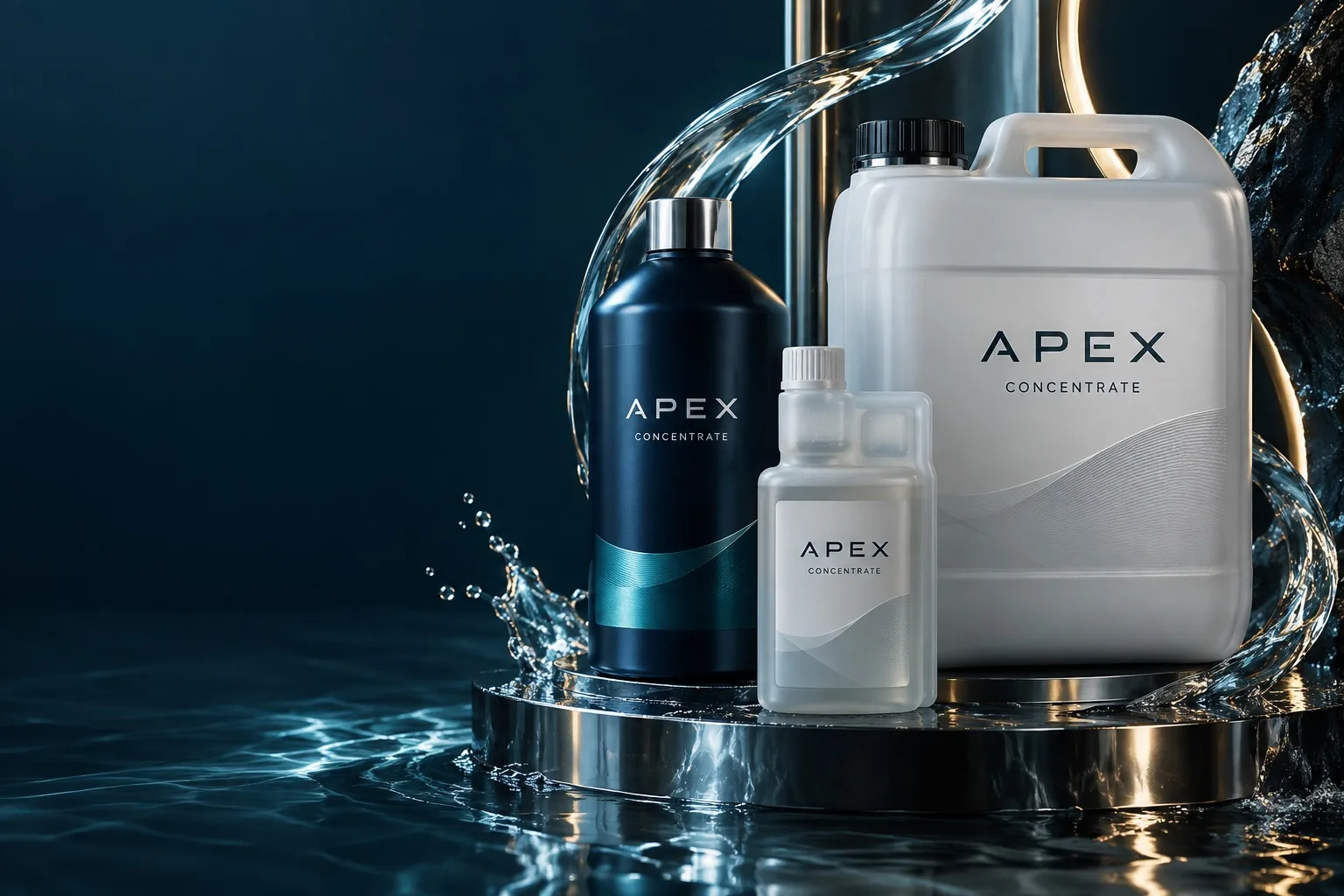
Start with the customer’s problem
A hotel may need room-level costing, a contractor multisite control, and a restaurant a suitable kitchen programme. Do not present concentrates as one universal benefit. Choose a sector, understand its task and identify the evidence needed before a trial.
Explain the proposed product, application, documents and how quantities and packaging will be confirmed. Clarity about verified and pending information is more persuasive than a savings percentage you cannot explain.
Compare equivalent supply volumes
Compare freight and storage for quantities delivering equivalent work, using approved preparation data. Include shipment weight, dimensions, carrier terms, order minimums, packaging and handling. Lower volume alone does not guarantee a lower freight bill because handling and pricing terms may differ.
Record actual packaging use too. The EPA reference discusses product selection and packaging or dilution systems; it does not certify APEX or establish any particular emissions reduction.
Include support in your margin
Customers may need training, an application visit or measuring equipment. Add these to selling costs and track repeat orders, complaints and returns. Concentrates may support a different service model, but margin depends on pricing, correct use and support costs, not pack price alone.
Begin with a focused range for a clear sector. Before entering a new market, verify documents, label language and local conditions for the specific product, especially disinfectants and pesticides. Keep approved document versions consistent.
Further reading
US EPA — Identifying greener cleaning productsGeneral guidance, not preparation instructions for a specific product. Product labels, documentation and local requirements take priority.
Explore the range